
Walnut Pond: Bringing Agriculture to Life in Our Own Backyard
/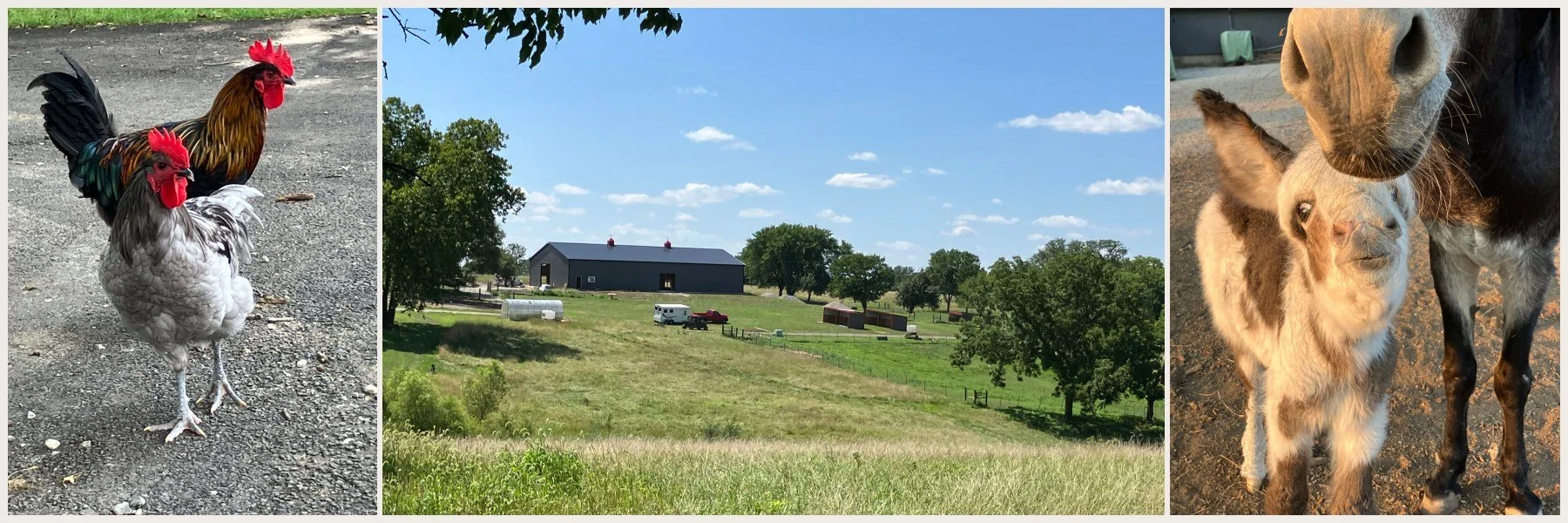
Photos courtesy of Walnut Pond Ag Discovery Center/Shawn Lagemann
In 2022, Shawn and John Lagemann purchased Walnut Pond Ranch with a vision that has since grown into something truly special for our region. Over the past three years, they have thoughtfully developed the property into what is now the Walnut Pond Agricultural Discovery Center — 80 acres uniquely situated within city limits and dedicated to reconnecting people with agriculture.
Both Shawn (Operations, Board Chairman & CEO) and John (Vice President and former John Deere executive) grew up in agriculture. They understand both the responsibility and the privilege of stewarding the land. But more than that, they felt called to share it.
Where Does Tapioca Come From?
Shawn often tells a story about standing in a field in Thailand, learning for the first time that tapioca comes from a plant. Even as someone raised in agriculture, she had never stopped to think about its origin. That moment sparked a powerful question:
If those of us close to agriculture don’t always know the full story of our food, what does the general public understand?
Walnut Pond was born from that realization — and from a desire to help bridge that gap.
A Mission Grounded in Education & Inspiration
The mission of Walnut Pond is simple but significant:
To enlighten visitors about where their food comes from, why agriculture matters to everyone, and the dedication required to feed a growing world.
Whether guests are 7th graders studying life sciences, Girl Scouts earning a badge, civic leaders, or corporate teams — Walnut Pond meets people where they are.
Programs are structured in “modules,” tailored by age and interest. Visitors might explore:
Stewardship & conservation — soil health, water use, regenerative practices
Livestock production systems — breeding to market, genetics, biosecurity
Biodiversity & heritage breeds
Homesteading & sustainability — practical ways consumers can reduce waste, buy local, and grow their own food
A Day at the Farm — an introduction to agriculture rooted in Maslow’s hierarchy of needs
The animals may draw people in, but it’s the deeper conversations that leave a lasting impression.
Changing Perceptions — One Visit at a Time
Many visitors arrive believing they already “know” where their food comes from. They leave with a new appreciation for the risk, science, economics, and decision-making involved in modern farming.
Walnut Pond addresses common misconceptions head-on — from GMOs to organic versus conventional production, from poultry production myths to the role of women in agriculture. Guests are often surprised to learn that this corridor from Columbia, MO to Manhattan, KS represents one of the greatest concentrations of animal health resources in the world.
The hands-on approach makes the science real. Genetics discussions come alive through heritage breeds, conversations about biodiversity, and even demonstrations explaining dominant and recessive traits using animals on site. Conservation isn’t theoretical — it’s practical and essential for both sustainability and economic viability.
Serving the Broader Community
Walnut Pond serves schools, 4-H and FFA groups, church youth groups, civic organizations, and partners like Kansas State Extension and Farm Bureau. The Olathe School District incorporates farm visits directly into its curriculum — from soil and water sampling to hands-on genetics lessons.
Beyond tours, the impact extends into the community:
Donations of eggs, produce, and meat to local food pantries
Free seedlings provided to schools and community gardens
Educational exhibits at events like the American Royal
Mobile educational displays and live demonstrations in schools
Incubators loaned to families for hands-on learning
The Lagemanns are quick to credit the community for its strong support — including engagement from state and federal leaders — and are planning a community open house as a thank-you.
Looking Ahead: Agriculture Remote Classroom (ARC)
If you ask Shawn about the future, her excitement is contagious.
Transportation costs and limited school resources have made it harder for students to travel to the farm. So Walnut Pond is bringing agriculture to them. Mobile modules are already being tested — and the long-term vision is ambitious: an Agriculture Remote Classroom (ARC) equipped with VR technology that can travel school-to-school, offering immersive farm tours and behind-the-scenes looks at facilities like cotton gins, grain mills, and feed manufacturers.
The goal? To demonstrate that every subject — science, math, economics, even technology — connects back to agriculture.
Time Well Spent
At the heart of it all is a simple hope: that every visitor leaves feeling inspired.
Inspired by the hard work of farmers.
Inspired by the bounty of the earth.
Inspired to be thoughtful consumers.
Inspired, perhaps, to pursue a future in agriculture.
Walnut Pond reminds us that agriculture is not abstract. It is personal. It is essential. And it belongs to all of us.
We are fortunate to have this kind of resource in our backyard — and grateful to Shawn and John for their stewardship, leadership, and passion.