
Kansas City Council Recognizes Agriculture During National Ag Week
/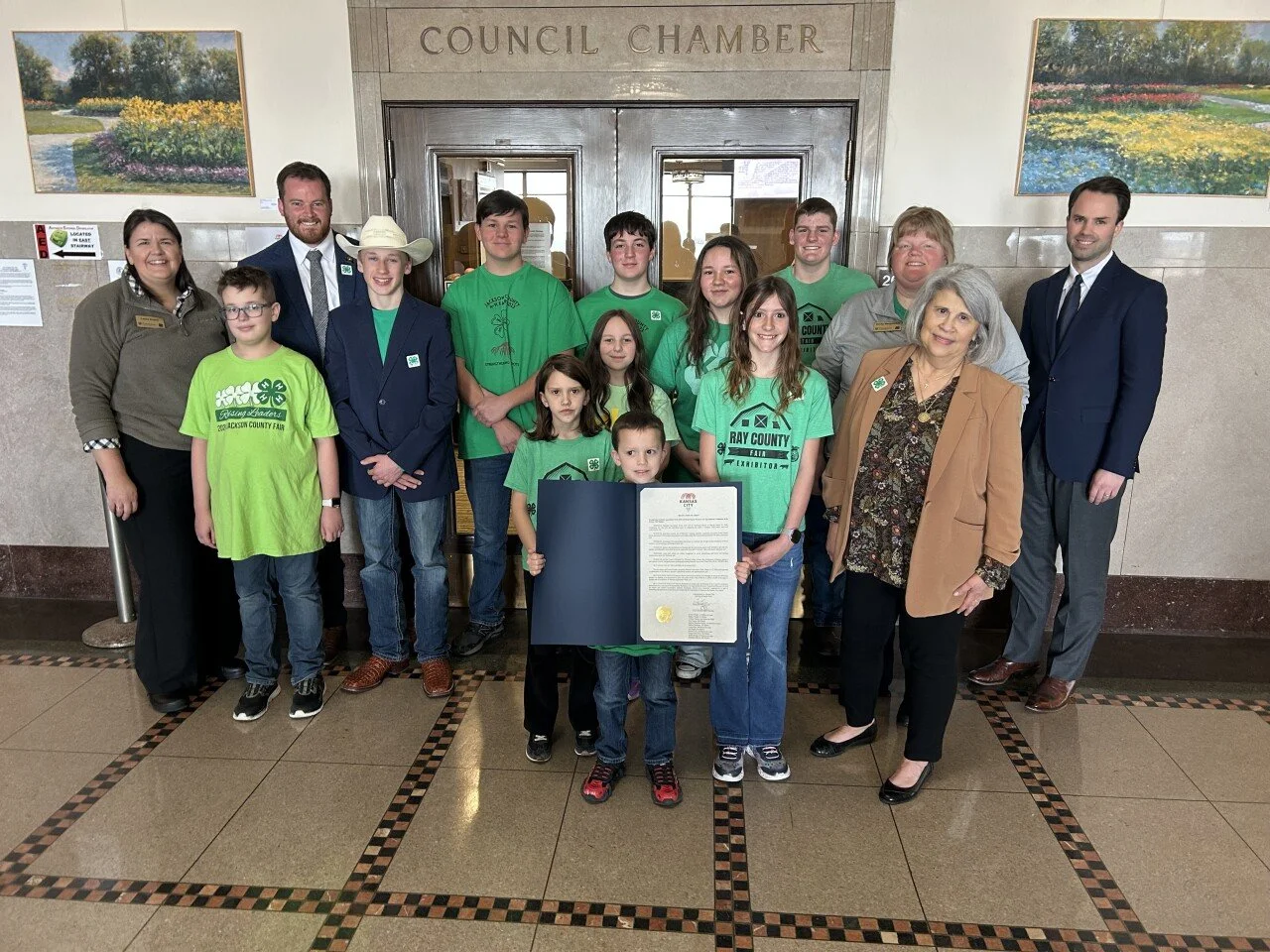
In recognition of the region’s deep agricultural heritage and its continuing role in feeding and fueling the world, the Kansas City, Missouri City Council recently adopted a special resolution honoring local agriculture producers during National Agriculture Week 2026, being observed March 15–21, with National Ag Day celebrated March 24.
The resolution, sponsored by Councilman Nathan Willett, highlights the essential contributions of farmers, ranchers, and agribusinesses and recognizes the importance of agriculture to the Kansas City region and the broader national economy.
Representatives of the Agricultural Business Council of Kansas City attended the March 12 City Council meeting, including Council Vice President Zach Helder and Council Founder Gina Bowman, who were invited to participate as the City Council recognized agriculture’s role in the region’s past, present, and future.
During the meeting, Helder shared remarks reflecting on Kansas City’s agricultural history and its continuing leadership in the food and agriculture sector.
Helder’s full remarks are included below:
While many regions prepare meat with sauce, only one city makes Barbecue -- and that's Kansas City. Our baseball team is named after our livestock show, the American Royal. Our pride in these institutions might be a clue that our city was built on Agriculture.
Kansas City exists because of its position at the confluence of rivers and rail lines that moved grain and cattle across a continent.
The stockyards that once sprawled across the West Bottoms made our city the gateway between the ranch and the American family table.
The Kansas City Board of Trade set the price of hard red winter wheat for the world.
In this region, and this city, Food and agriculture is our inheritance.
It has been our gift to our country, an abundant and nutritious food supply.
And, in sharing it with the most vulnerable and hungry people across the world, it has been our act of hope.
But despite our rich history, agriculture is not only Kansas City's past. It is Kansas City's present, and it is Kansas City's future.
Within a two-hour drive of where we sit, this region produces more of the nation's food supply than nearly any metro area in the country. The Kansas City Animal Health Corridor — stretching from Manhattan, Kansas to Columbia, Missouri — represents the largest concentration of animal health companies on the planet.
When a new vaccine is developed for livestock, the odds are good it started here. And if a novel animal disease emerges, we are the first line of defense.
In 2019, the federal government moved two of USDA's premier research agencies — the Economic Research Service and the National Institute of Food and Agriculture — to Kansas City. That decision recognized what the people in this room already know: if you want to be close to American agriculture, you come here.
And it is not just the big institutions. It is the grain elevators across the state line. The equipment dealers. The co-ops. The extension agents from K-State and Mizzou. The producers who drive into town for a meeting and drive home to check on the calves.
Agriculture is woven into this region's economy so deeply that most Kansas Citians interact with it every day without realizing it.
National Agriculture Week is a chance to make sure they do realize it. That the food on every table has a story in which Kansas City plays a leading role.
On behalf of the Agricultural Business Council of Kansas City, thank you for this declaration — and for recognizing the men and women whose work feeds the world, and which has always been an essential part of the Spirit of Kansas City.
National Agriculture Week celebrates the essential role agriculture plays in providing food, fiber, and fuel while highlighting the industry’s contributions to sustainability, technology, and economic development. The observance also encourages greater public awareness of where food originates and the people and communities that produce it.
More information about National Agriculture Week and National Ag Day is available at www.agday.org.