

Ag Industry Influences Missouri Governor’s Policy
/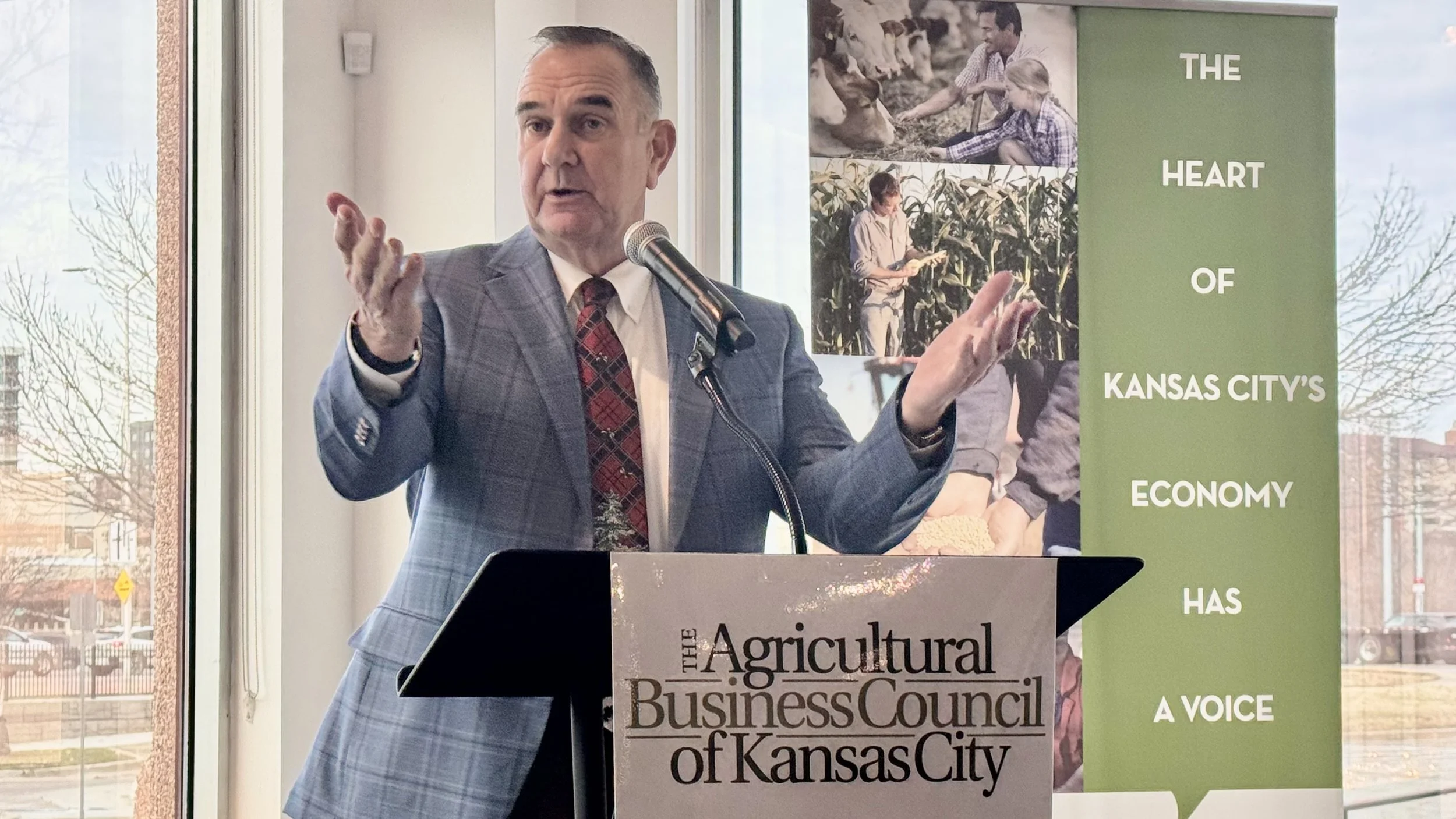
Addressing the Agricultural Business Council at its annual meeting this month, Missouri Governor Mike Kehoe explained that agriculture is a cornerstone of his administration’s approach to political and business policymaking. He admitted that it seems an unusual position for a politician who grew up in St. Louis and who was not raised with deep roots in farming or ranching—he proudly proclaims he is a “first-generation farmer” in a state that ranks as one of the world’s major hubs of agriculture education, research, innovation, and output. He quipped that foreign farmers, agribusinesses, academics, researchers and foreign trade officials “don’t know where Missouri is, but they know what Missouri does.”
Gov. Kehoe was first attracted to agriculture when he took an after-school job on a farm at age 15. “I thought, this is the world I want to be from, and I quickly transitioned from being a city dweller to eventually acquiring my first farm when I was 19, and then my first set of cattle when I was 21.” Agricultural life and labor teaches a lot about business, he said. From his time on the farm he learned that when something inevitably goes wrong with equipment, such as a flat tire, a busted hydraulic hose, or a dead battery, there’s no time to delay responding to it. “That’s what has helped me so much in small business – you don’t just lay around and cry about the problem. You find a solution and implement it, because that’s what agriculture does.”
The governor itemized some of the economic challenges farmers face, but suggested Missouri’s agricultural future would be healthier if new markets could be opened. Producers of corn and soybeans especially have been hurt by surging input costs, while market prices for these two row crops have remained low.
Kehoe indicated Missouri state lawmakers would not be initiating major aid programs. But he said there are things that can be done to get government “out of the way” of family farmers. Government aid programs, he added, have been helpful. “But farmers and ranchers prefer trade before aid.”
Down the Road
Gov. Kehoe is wary that Missouri’s agricultural industry could age out of its current prominence. “Agriculture is who we are, who we’re always going to be,” he said, “but the industry needs to be invested in for the future.” The average age of farmers in the state is near 60. “We’ve got to get more urban, younger people involved in the agricultural labor and career market.” He is optimistic, however. The governor observed that when young people visit his farm “it’s like me when I was 15 – they are just incredibly enamored that there’s a place that has cattle.”