
High Fuel Costs, High Anxiety
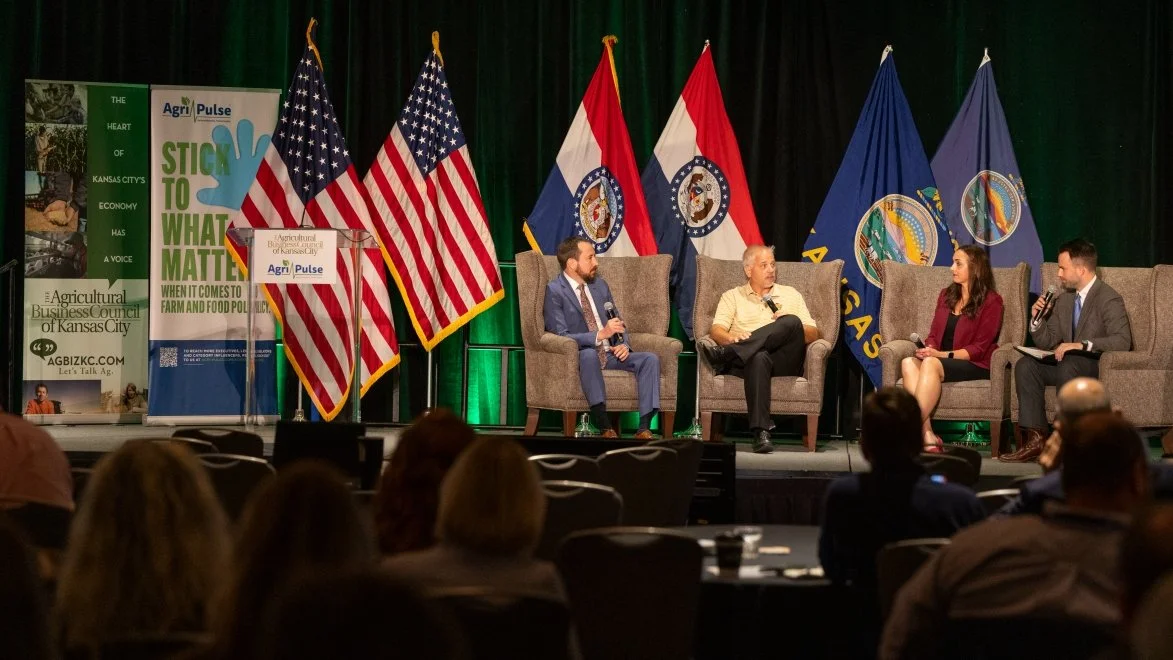
As this year’s Ag Outlook Forum, hosted by Agri-Pulse Communications and the Agricultural Business Council, kicked off discussions of the agricultural economy and the high costs of inputs, U.S. diesel fuel prices reached a new record at $6.53 a gallon. High input costs—from fuel, to fertilizer, crop protection tools, and equipment, remain a top concern for the industry. But panelists illuminated some bright spots. Krista Swanson, chief economist at the National Corn Growers Association, noted that farmers are resilient, and about 90% had locked-in costs for 2026 a while back. “But,” she said, “there’s only so much they can handle.” Josh Linville, vice president of StoneX Fertilizer, maintained most input costs originate overseas. Asked what farmers could change at this point, Swanson answered ‘not much.’ A majority in a poll of 1,200, she said, “claimed they were already set, and had for the most part achieved their goals set in 2025.”
New Event Structure
This year’s Ag Outlook Forum reprised a format that began last year. The event got underway Monday afternoon, September 21 – a day before the Forum – with a Fireside Chat at the Muehlebach Hotel. Agri-Pulse founder Sara Wyant moderated the conversation. Kansas City Mayor Quinton Lucas described his agricultural development plan that focuses on urban farming, neighborhood revitalization and tackling food insecurity. Senator Mike Johanns, former USDA Secretary, covered trade, input costs and tough times on the farm. On trade, Johanns remains optimistic about the opportunities for new markets abroad, while cautioning that “we need our allies in Canada and a strong USMCA to make the farm economy work.”
Garrett Hawkins and Glen Brunkow discussed some of the issues they're hearing from their members, including the hot topic of data centers, emphasizing that data center decisions should be made at the local level. But farmers' property rights should be protected and eminent domain should be off the table.
Trends
Scott Gerlt, chief economist at the American Soybean Association, claimed American farmers are looking much better than their counterparts around the world. While panelists were guardedly upbeat about American agriculture, they maintained that U.S. farmers are still absorbing more of the brunt from tariffs, war and high import costs than their fellow counterparts around the world. But one of them argued that American farmers are more suited and able to deal with current global conditions than any other demographic nationwide. Another said farmers were war victims and should be eligible for reparations.
Nate Kauffman, senior vice president Omaha Branch, Federal Reserve Bank of Kansas City, said that financial conditions of agriculture remain relatively stable. “Working capital has deteriorated somewhat and debt continues to build,” he explained, “but farm real estate values remain strong.” He added that farm interest rates are lower than recent years.
Dennis Rodenbaugh, president and CEO of Dairy Farmers of America, claimed that Kansas City is the center of U.S. agriculture. It is moving at a fast pace. But recent federal regulations easing restrictions on food animal production is allowing DFA to actively expanding its high‑protein dairy portfolio to meet growing consumer demand for protein‑rich foods, leveraging dairy’s natural advantage as a complete, high‑quality protein source. Protein has become one of the most influential drivers in food and beverage, with 7 in 10 Americans actively looking to increase their protein intake. At the same time, dairy has a natural advantage in the space, offering complete, high-quality protein. As the nation's largest dairy cooperative, Dairy Farmers of America saw an opportunity to lead this shift. The challenge is to evolve its portfolio of iconic regional brands into modern protein destinations that could attract health-conscious consumers while preserving the local heritage, trust, and brand equity they had built over generations.
Seth Meyer, director of the University of Missouri’s Food and Agricultural Policy Research Institute (FAPRI), was hopeful that a Farm Bill might be passed by the end of the year. He commented that margins on the farms are “not great and need to be talked about.” He also predicted that “strong profits should give farmers incentive to build on new technology.”
Several speakers and panelists touched on emerging biofuel opportunities. In 2025, the U.S. shipped 2.2 billion gallons of ethanol around the world worth $4.7 billion. According to a Thomson-Reuters report this month, global biofuel output could grow 70% by 2030. American Soybean Association’s Scott Gerlt touted soybeans as more than a crop. “It’s a fuel!”
USDA’s chief economist Dr. Justin Benavidez reviewed some of the fundamental headwinds that affected U.S. agricultural performance over the last eight or nine years. “From 2008 to 2016 global commodity production increased, resulting in burdensome stocks by 2017 for corn, soybeans, rice and wheat,” he pointed out. COVID-19 disrupted just about every aspect of culture, society, production, shipping and finance. And the Russian invasion of Ukraine and the U.S. conflict with Iran interrupted just about all aspects of commerce. Dr. Benavidez identified areas and situations globally that need to be addressed:
Positive outcome from meetings with China
Duration of conflict in Iran and its influence on cost of production
Renegotiation of terms for USMCA or bilateral agreements with Canada
Completion of Farm Bill 2.0
Richard Fordyce, USDA Under Secretary for Farm Production and Conservation closed the Ag Outlook Forum with a litany of multiple, simultaneous challenges facing U.S. agriculture that require immediate action, starting with Congressional passage of Farm Bill 2026.
Those Were The Days
The more than 300 attendees at the 2026 Ag Outlook Forum were treated to a special fireside chat with Dan Glickman, former Kansas U.S. Congressional Representative and USDA Secretary from 1995 to 2001. Glickman touched on the value of bipartisanship in agriculture. He reflected on his relationships with several U.S. presidents in both parties, and pointed to Sen. Bob Dole and Dr. Barry Flinchbaugh as leading influencers to U.S. presidents on agriculture. He noted that not just anyone can do that job. “We need someone smart enough to inform the President; overseeing agricultural economics requires strong intellectual guidance.”